
Wintering Messor ants - a holiday after the harvest that extends the colony's life
In winter, harvester ants need their rest, or the queen works without a break and ages faster. We explain when to start the winter rest, where to keep the colony and how to wake it up in spring.
In autumn the harvest on the steppe comes to an end. The grain lies in underground granaries, the field empties, and the Messor colony slows down almost to a standstill. It lives like this until spring, and at home it needs the same winter rest. Let's look at how to arrange it without risk - from the first signs of autumn in the nest to the spring awakening.
Why ants need a winter rest
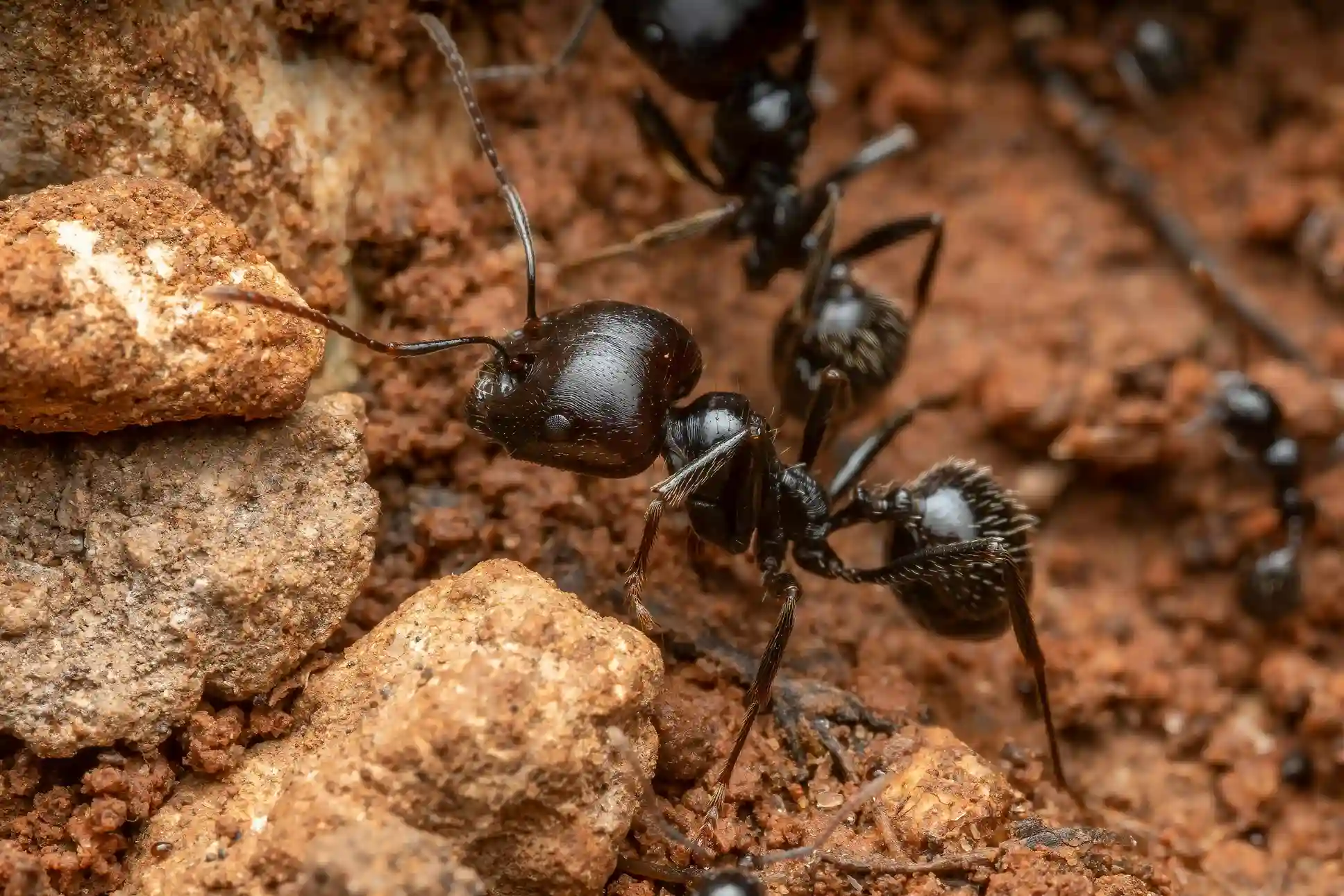
Messor structor, the harvester ant, comes from the steppe, where winters are cold. For this ant, a winter rest is a normal part of the year, like the break peasants take after bringing in the harvest. Without wintering, the queen lays eggs all year round without a pause, lives a shorter life, and the family develops worse. A couple of cool months gives the colony back its natural rhythm.
When to start
Wintering usually starts in November or December, and the colony gives you the signs itself. There are fewer larvae, the ants come out into the arena less often and gather in a tight cluster around the queen. Stop giving protein - the feeder beetle larvae - 1-2 weeks before wintering. The seeds can stay, they won't go to waste.
Where and at what temperature
A spot that stays at roughly +8 to +12 °C with no sudden swings will do - an enclosed balcony, a cool pantry, a cellar. The main thing is that it never freezes there. The rules from the starter kit guide apply in winter too - no direct sunlight on the nest and no constant vibrations nearby. You can move the whole formicarium, and if the colony still lives in a test tube, you move only the tube.
In winter, the best care you can give a colony is to leave it to rest.
GoodAntShop
How to get through winter without losses
Lower the temperature gradually, over 1-2 weeks, rather than in a single move from a warm room to a cold balcony. A sudden swing is stressful for the colony. The wintering itself lasts 2-3 months. Throughout that time, don't disturb the ants and don't open the formicarium unless you have to.
The humidifier needs water in winter too. Check it every couple of weeks and top it up if the level has dropped - a dried-out nest is dangerous at any time of year. Do it quickly and calmly so you don't wake the colony too early.
Waking the colony in spring
In February or March, bring the colony back into the warmth just as gradually as you cooled it. Within a few days the ants will liven up and start coming out into the arena, and the queen will lay eggs again. That's when you bring back protein - feeder beetle larvae 1-2 times a week - and keep seeds in the arena at all times.
Not sure your colony is ready for wintering? Write to us - we'll advise you on your own ant family and support you every step of the way.
Contact usFAQ
Is wintering a must for Messor ants?
Yes. Without a winter rest the queen lives a shorter life and the colony develops worse. A couple of cool months is a natural part of the year for Messor structor.
At what temperature do Messor ants hibernate?
Roughly +8 to +12 °C, with no frost and no sudden swings. An enclosed balcony, a cool pantry or a cellar all work.
Do ants need feeding in winter?
Hardly at all. Protein is stopped 1-2 weeks before wintering, the seeds can stay, and the humidifier still needs water in winter. How the humidification works is explained in the starter kit guide.
Read also
The starter kit - a step-by-step plan from test tube to top floor
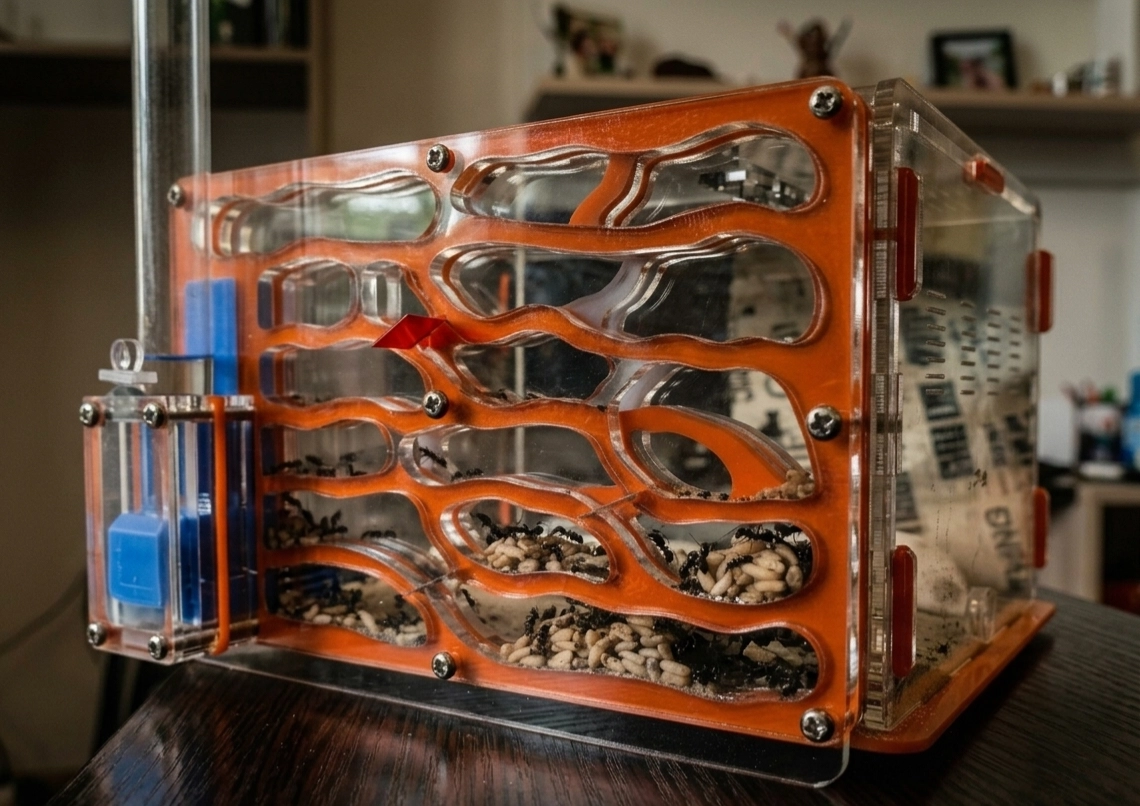
The formicarium, the test tube with the colony and the little jar of grain are already at home. When to connect the arena, what to feed and how often, and when to open new floors - we've broken it all down step by step, with photos of the formicarium.
What to feed ants at home - a colony menu from syrup to live food
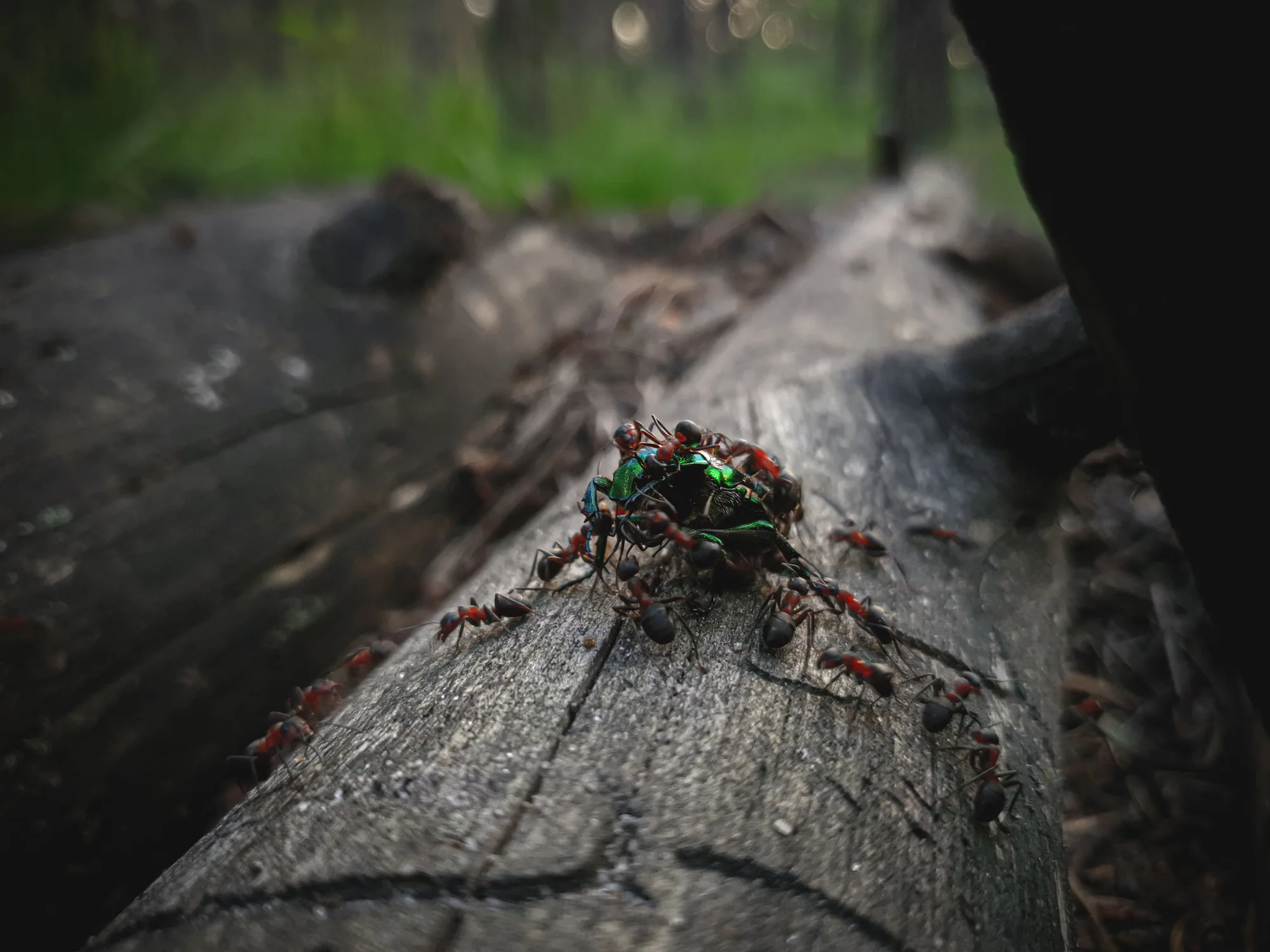
Adult ants hardly eat solid food at all, and protein is needed first and foremost by the larvae. We explain how a colony feeds itself, what to give different species, how often to feed and what should never go into the arena.